


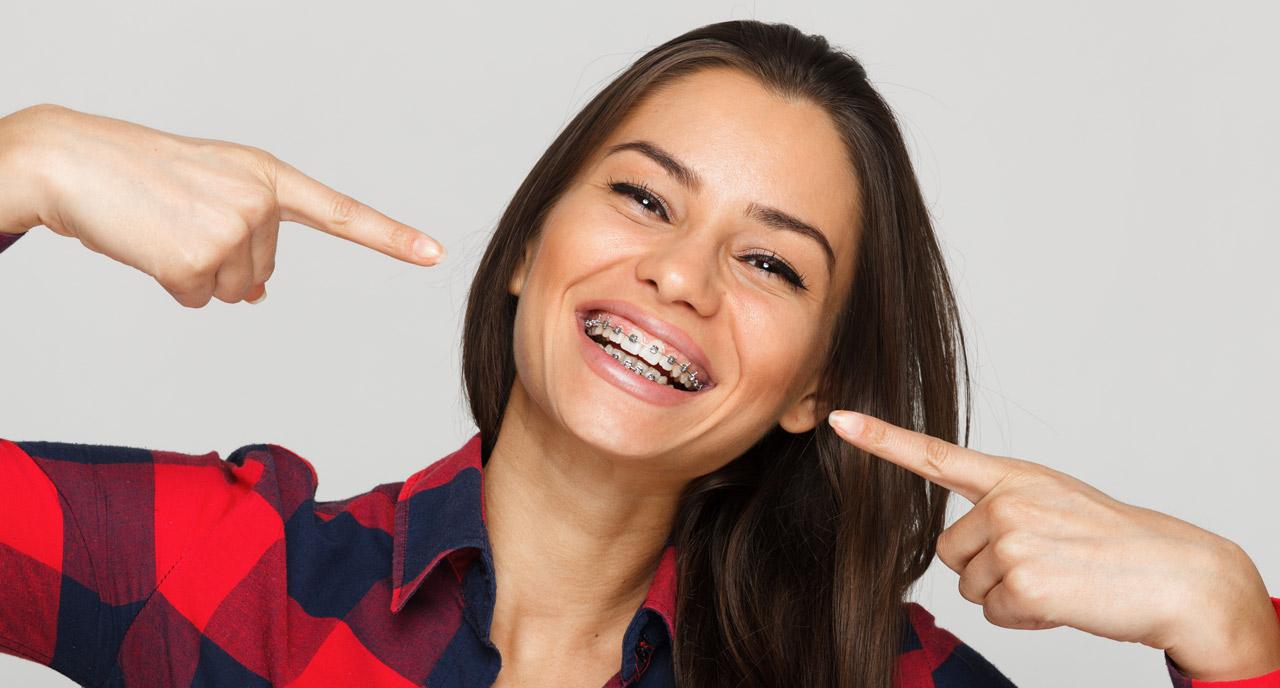
At Cumberland Dental in Cumberland Park, adult braces cost from $7,500 — about $58 a week on an interest-free Denticare plan, with everything included. Adults can choose between metal braces, ceramic (tooth-coloured) braces, lingual braces, self-ligating brackets and clear aligners such as Invisalign. The right option depends on how complex your case is, how visible you want treatment to be, and what you are willing to manage day to day — not on which type is “best”.
Reviewed by Dr Jack Gaffey — a general dentist with a special interest in orthodontics, practising since 2001 and placing braces since 2011. Cumberland Dental, Cumberland Park, Adelaide. Last updated July 2026.
The short answer
- Metal braces — the most affordable and the most versatile. Visible, but suitable for everything from simple crowding to complex bites.
- Ceramic (tooth-coloured) braces — the same system with tooth-shaded brackets. Far less noticeable, slightly more fragile.
- Lingual braces — fitted behind the teeth, so hidden from view. Expensive, harder to clean, and affects speech. We do not provide them.
- Self-ligating brackets — a bracket design that holds the wire with a built-in clip instead of an elastic tie. Available in metal or ceramic; not a separate treatment.
- Clear aligners (Invisalign) — removable transparent trays. Near-invisible and easy to live with, but only work if worn 20 to 22 hours a day.
At Cumberland Dental, braces are $7,500 whichever bracket type you choose, and Invisalign is $8,000 all-inclusive. For the full breakdown of what treatment costs locally, see our guide to how much braces cost in Adelaide.
The five types of braces for adults
1. Metal braces
Stainless steel brackets bonded to each tooth and joined by a wire that is adjusted over time. Modern brackets are smaller than earlier generations, and heat-activated archwires use body temperature to move teeth more gently than older stiff wires.
Suits: everything from mild crowding to significant bite correction. Because they are fixed and work continuously, they give the most predictable control over tooth movement.
Trade-offs: visible; some food restrictions; brushing and flossing take more care; mild soreness for a couple of days after each adjustment.
2. Ceramic (tooth-coloured) braces
The same mechanics as metal, with brackets made from a tooth-shaded ceramic. They are much less noticeable at conversational distance, which is why most adults ask about them first.
Suits: adults who want fixed braces without the metal look, including anyone in a client-facing role.
Trade-offs: ceramic brackets are more brittle than steel and can chip if treated roughly, and the elastic ties can pick up staining from coffee, tea, red wine and strongly coloured foods between visits — the ties are replaced at each adjustment.
At Cumberland Dental, ceramic brackets on the top front teeth are included as standard at no extra cost. More detail on our tooth-coloured braces page.
3. Lingual braces
Custom brackets bonded to the inner surface of the teeth, so they are invisible from the front. They can treat a wide range of problems and take a similar length of time to conventional braces.
Trade-offs: they are the most expensive option; they take a period of adjustment for speech; cleaning is more difficult; and the finishing detail can be harder to achieve than with braces on the outer surface.
We do not provide lingual braces. For patients whose main concern is appearance, we would generally discuss ceramic braces or clear aligners instead, and refer on where lingual treatment is genuinely the better answer.
4. Self-ligating brackets
Self-ligating brackets hold the archwire with a small built-in clip or door rather than an elastic tie. They come in both metal and ceramic, so this is a bracket design rather than a separate kind of treatment.
The clip means there are no elastic ties to replace or discolour, and wire changes can be quicker at the chair. Claims that they dramatically shorten overall treatment are not well supported by the evidence; the research generally shows outcomes comparable to conventional brackets. Any provider offering them should be able to explain what difference they expect in your specific case.
5. Clear aligners (Invisalign)
A series of custom-made transparent trays, each worn for one to two weeks, that move the teeth in small increments. They are removed for eating and cleaning, which is both the main advantage and the main risk.
Suits: mild to moderate crowding, spacing and bite problems, in people who will reliably wear them 20 to 22 hours a day.
Trade-offs: they only work while they are in your mouth, so results depend entirely on compliance. Complex movements and significant bite correction are generally more predictable with fixed braces.
See our Invisalign in Adelaide page, or the detailed Invisalign cost guide. If you are weighing the two approaches against each other, our guide to braces vs Invisalign compares them properly.
Comparing the options
| Option | Visibility | Best suited to | Main trade-off |
|---|---|---|---|
| Metal braces | Visible | All cases, including complex bites | Appearance |
| Ceramic braces | Subtle | All cases, appearance-conscious adults | More brittle; ties can stain |
| Lingual braces | Hidden | Adults needing full invisibility | Cost, speech, cleaning (not offered here) |
| Self-ligating | Depends on bracket | A design choice within metal or ceramic | No proven shortening of treatment |
| Clear aligners | Near-invisible | Mild to moderate cases | Must be worn 20–22 hours a day |
What adult braces cost in Adelaide
Where Adelaide providers publish figures, adult treatment generally falls in these ranges:
| Type | Typical Adelaide cost (AUD) |
|---|---|
| Metal braces (full course) | $6,000 – $9,000 |
| Ceramic (tooth-coloured) braces | $6,500 – $11,000 |
| Lingual braces | $9,500 – $15,000+ |
| Clear aligners (comprehensive) | $6,000 – $9,500 |
Most practices do not publish a figure at all. In a June 2026 page-by-page review of 27 Adelaide specialist orthodontic practices, just one published a comprehensive treatment price on its own website — the rest quote only after a consultation. That is why we publish ours.
At Cumberland Dental
- Braces (metal or ceramic): from $7,500 — about $58 a week on an interest-free Denticare plan with a 20% deposit. The price is the same whichever bracket type you choose, and the same for adults and children.
- Invisalign: from $8,000 all-inclusive — about $62 a week.
- Everything is included: records and x-rays, every scheduled adjustment, unlimited repairs to broken brackets, retainers, refinements and emergency visits during treatment — not billed on top.
- $500 sibling discount where a family member has been treated with us, and a $500 pay-in-full discount. The two combine, bringing braces to $6,500 if both apply.
- Payment plans: interest-free HUMM with no deposit, interest-free Denticare with a 20% deposit, or pay upfront.
- Your initial consultation is free, and you are welcome to bring an existing quote so we can go through what it does and does not cover.
Treatment here is provided by Dr Jack Gaffey, a general dentist with a special interest in orthodontics since 2011 — a more affordable alternative to a specialist orthodontist for suitable cases, with complex cases referred on. For the wider picture, see our overview of the cost of orthodontics and affordable options for Adelaide families.
Does private health insurance help?
It helps, but less than most people expect. Orthodontic extras cover typically carries a first-year limit of around $400 and a lifetime limit of around $1,800, and a 12-month waiting period usually applies. On a $7,500 course you would still fund the large majority yourself. Most funds pay the same benefit whether a general dentist or a specialist orthodontist provides the treatment, though a couple pay a general dentist less — we tell you which before you commit.
Full detail in our guide to braces and private health insurance in Adelaide.
How long adult braces take
Most braces treatment takes 18 to 24 months. Straightforward cases — minor crowding or small gaps — often finish in 12 to 18 months, while significant bite problems or severe crowding can run beyond two years. Clear aligners cover a similar 12 to 24 months for comprehensive cases.
Adult teeth sit in denser bone than a growing child’s, so movement can be a little slower, and existing dental work such as crowns, bridges or implants may change the approach. More detail in our guide to how long braces take.
What to expect
Your first appointment is a free consultation. We take digital x-rays and photographs, examine your teeth and bite, talk through which options are realistic for your case, and give you a written all-inclusive quote and an estimated timeline before you commit to anything. There is no obligation and no charge.
Once treatment starts, you will come in for an adjustment every four to eight weeks. Expect mild soreness for two or three days after each visit — soft foods and ordinary pain relief handle it. Brushing after meals matters more than usual, because brackets and wires trap food.
If you have been putting this off on the assumption you have left it too late, our guide to whether you are too old for braces covers what changes with age and what does not. You can also read more about adult braces at Cumberland Dental.
After treatment: retainers
Teeth drift back towards their old positions if nothing holds them, so retention is part of the treatment, not an optional extra. You wear a retainer full-time for about the first three months after the braces come off, then at night for the long term.
Clear retainers are the usual choice. Where a bonded wire is used behind the teeth (uncommon), repairs are included twice within two years before we move you to clear retainers. If you have had braces before and stopped wearing your retainer, our guide on what to do after going too long without a retainer explains your options.
Frequently asked questions
What types of braces are available for adults?
Adults can choose metal braces, ceramic (tooth-coloured) braces, lingual braces fitted behind the teeth, self-ligating brackets in either metal or ceramic, and removable clear aligners such as Invisalign. Cumberland Dental provides metal braces, ceramic braces and Invisalign, and does not provide lingual braces.
How much do adult braces cost in Adelaide?
A full course of adult braces in Adelaide typically costs about $6,000 to $9,000 for metal and $6,500 to $11,000 for ceramic. At Cumberland Dental, braces start from $7,500 — around $58 a week on an interest-free Denticare plan — whichever bracket type you choose.
Are ceramic braces more expensive than metal braces?
Across the market, usually yes, because the materials cost more. At Cumberland Dental both are $7,500, and ceramic brackets on the top front teeth are included as standard.
Which type of braces is best for adults?
There is no single best option. Fixed braces give the most control for complex movements and significant bite correction; clear aligners are less visible and easier to live with but depend on being worn 20 to 22 hours a day. Which is appropriate is a clinical judgement made at your assessment.
How long do adult braces take?
Most adult braces treatment takes 18 to 24 months. Simple cases can finish in 12 to 18 months; complex bites or severe crowding can take longer than two years.
Can a general dentist provide braces?
Yes. Braces are not restricted to specialist orthodontists — a general dentist who is trained and competent can provide them within their scope of practice, and no referral is needed. Our guide to whether you need a specialist orthodontist for braces sets out the differences in training, scope and cost.
Book your free consultation
To talk through which type of braces suits your case and get a clear, all-inclusive quote — and to bring along any existing quote — call Cumberland Dental in Cumberland Park on (08) 8271 6233. Your first consultation is free.
